Harness Engineering Is the First Fork Layer
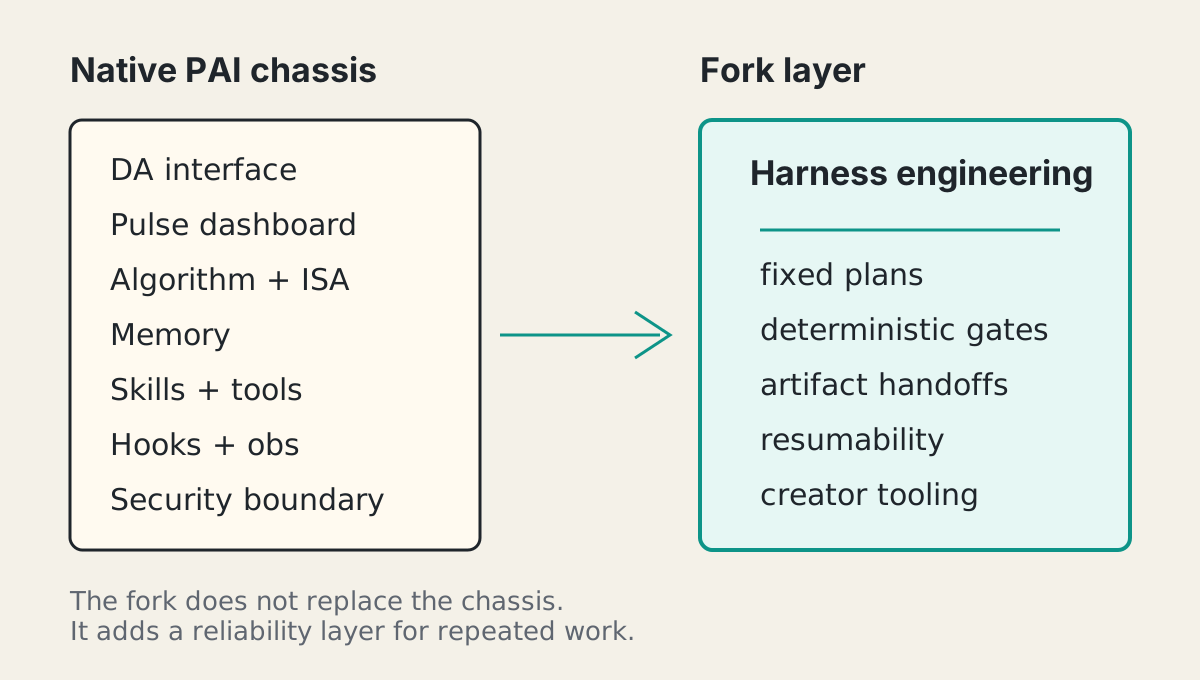
Post 1 documented the chassis: DA as interface, Pulse as dashboard, PAI as the operating system underneath.
This post is about the first fork layer on top of that chassis.
Not a full map of every extension. Not a tour of every tool. One layer: harness engineering.
The question is simple. Once the system has memory, skills, tools, hooks, security, and a runtime, what do you add to make repeated work reliable?
The answer is not “more agents.” It is structure that earns its keep: fixed plans, deterministic gates, concrete artifacts, resumability, and creator tools that only activate when the work is actually workflow-shaped.
The placement matters: this is a layer on top of the chassis, not a replacement for it.
The Problem: Repeated Work Decays in Chat
Chat is good at improvisation. That is also why it is bad as the only home for repeated work.
The first time I solve a problem, the path can be loose. I need exploration, judgment, and a willingness to change direction. But after the third or fourth time, looseness becomes waste. The same decisions reappear. The same checks get forgotten. The same handoff shape has to be rebuilt from memory.
Skills improve this. A skill gives the assistant routing rules, examples, workflow notes, and supporting tools. But a skill is still often a loaded capability surface. It tells the assistant how to behave.
A harness goes one layer harder. It turns repeated work into a fixed plan with gates.
That distinction matters.
A prompt can be clever. A skill can be useful. A harness is accountable.
What Counts as a Harness
The harness layer has a scope gate. Without it, “harness engineering” turns into ceremony.
A workflow has to satisfy four properties before it deserves harness shape:
- It is repeatable.
- It is pre-plannable.
- It is mechanically gateable.
- It is compositional.
If one of those fails, the answer is not a harness. Use normal code, a one-off script, a document, a manual checklist, or a skill. The point is not to wrap everything in structure. The point is to reserve structure for work where it buys reliability.
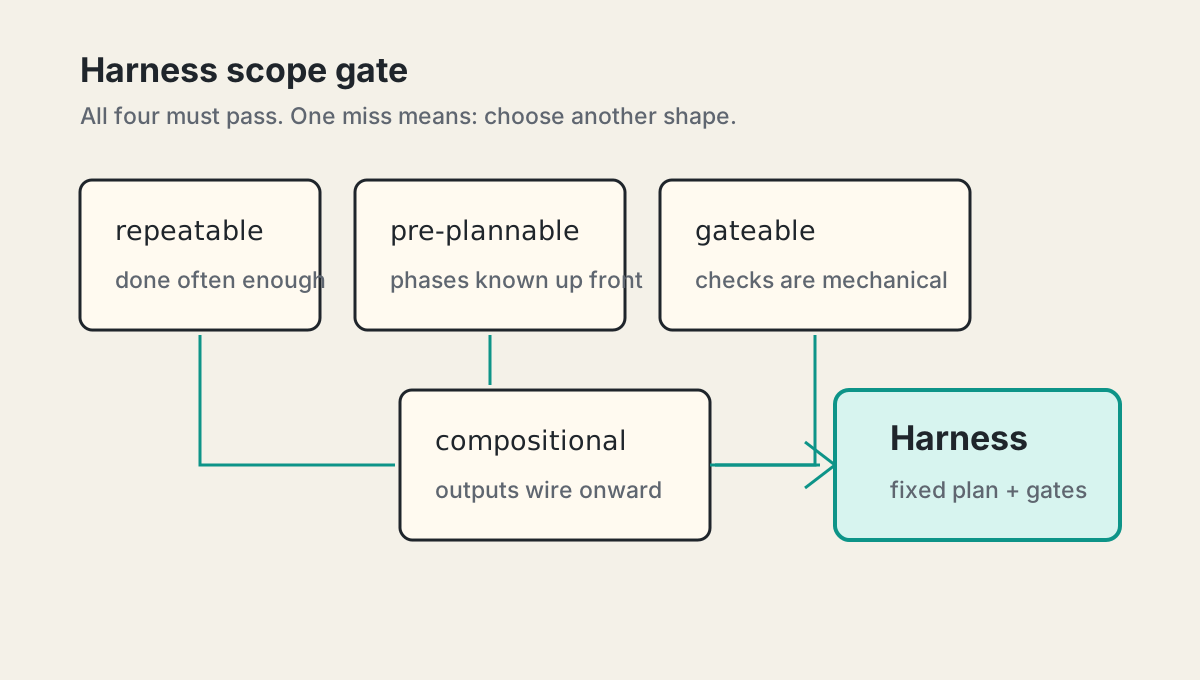
This is the anti-cargo-cult rule.
Not every complex task is a harness. Debugging is often discovery-driven. Writing is often subjective. Design work often needs taste loops. A novel feature may need conventional software architecture more than workflow machinery.
The harness shape fits the part of the system where the work is already known well enough to be made repeatable.
Anatomy of a Fixed-Plan Harness
Every harness phase has four slots: input requirements, action, validation gate, output artifact.
The shape is boring on purpose.
Input requirements say what must exist before the phase starts. The action does the work. The validation gate decides whether the phase earned the right to continue. The output artifact gives the next phase something concrete to read.
The gate is the load-bearing part.
A gate cannot be “looks good.” That is another prompt wearing a badge. A gate has to be mechanical: file exists, JSON parses, count is high enough, frontmatter matches, command exits zero, diff stays within scope, HTTP returns the expected shape, path is contained, checksum matches.
Subjective judgment can still exist. It just has to be named honestly as human-in-the-loop review, not disguised as deterministic validation.
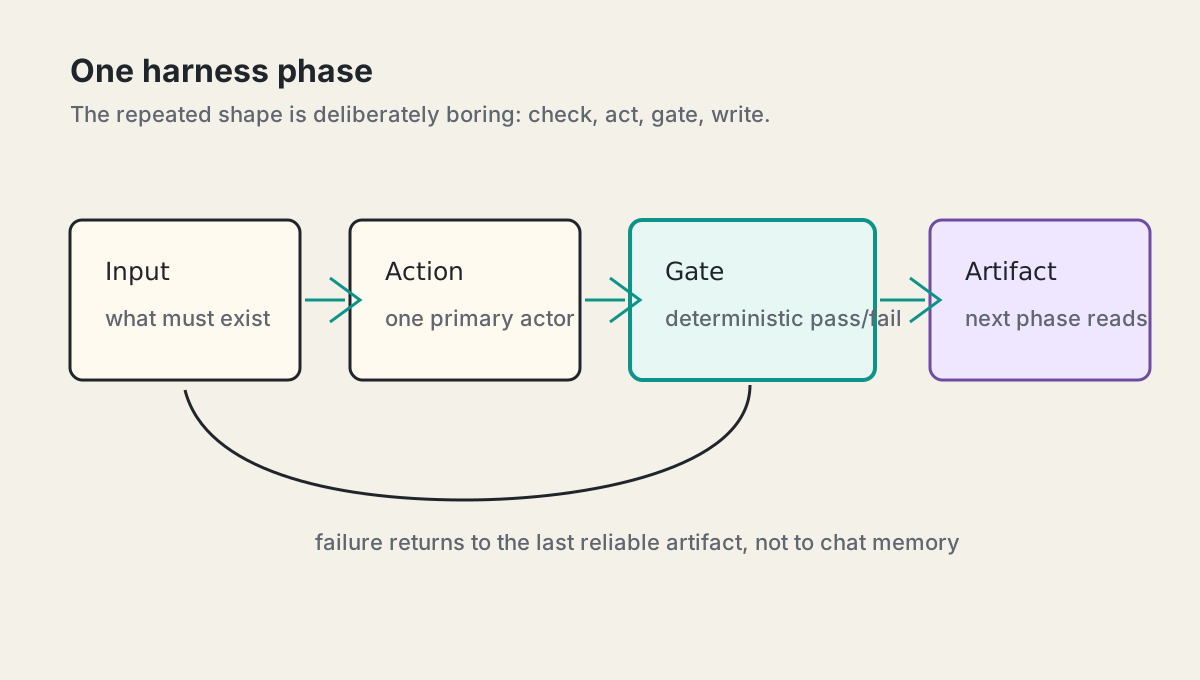
The artifact rule is what makes the harness survive real work.
If phase three fails, I should not have to reconstruct phase one from memory. If a session ends, the filesystem should still know where the workflow stopped. If the assistant comes back later, it should read the artifacts and continue from the next valid point.
That is the practical difference between a workflow and a conversation.
The 4-Map Around the Harness
Harnesses do not replace the Algorithm. They sit below it.
The Algorithm is the work engine. It handles complex tasks as a whole: observe, think, plan, build, execute, verify, learn. The harness layer is one possible output shape inside that larger work engine.
The production flow around harness-shaped work is the 4-map:
AUDIT -> DIAGRAM -> BUILD -> DELIVER.
This separation prevents a common mistake: treating the harness as the whole system.
It is not.
The Algorithm decides what kind of work this is. The 4-map structures production-shaped work. The harness template applies only when the BUILD output is workflow-shaped.
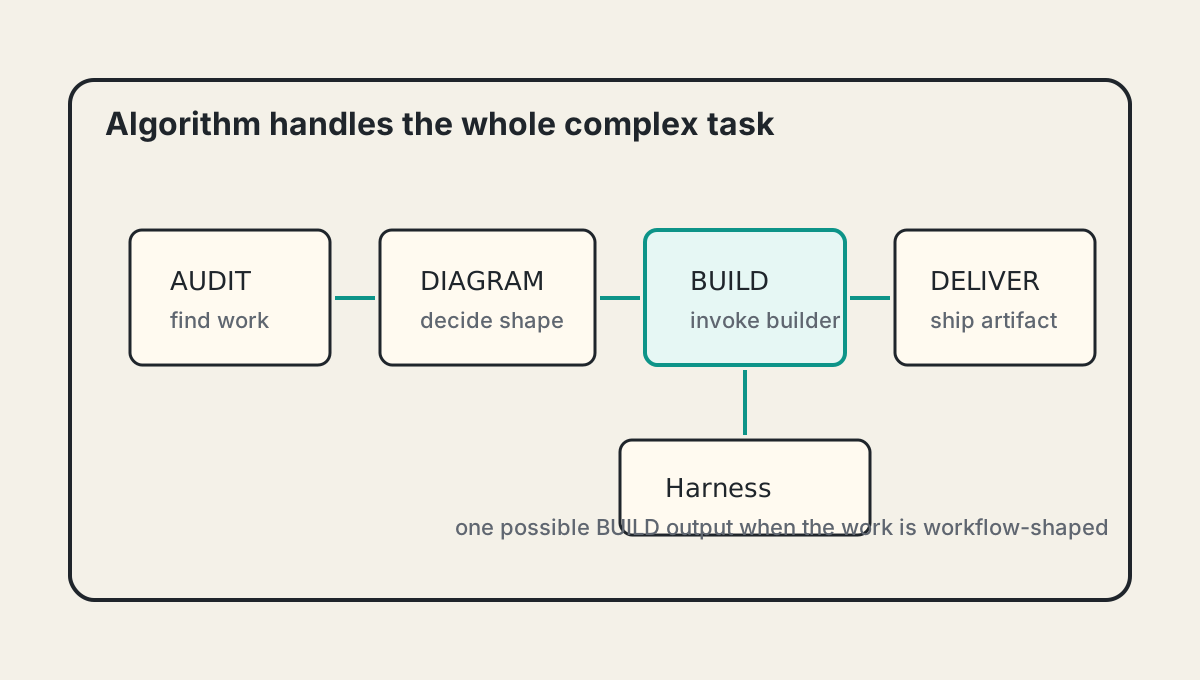
That boundary keeps the system sane.
If the task is a new essay, write. If it is a code module, build code. If it is doctrine, write doctrine. If it is repeated, pre-plannable, gateable, and compositional, make a harness.
Harness-Creator
Once the harness shape exists, the next problem is obvious: creating harnesses by hand also becomes repeated work.
That is what harness-creator is for.
It has three conceptual modes:
compose is for reuse. If the needed atoms already exist, the tool should wire them together instead of inventing a new workflow.
check is for drift. A harness fleet needs conformance checks the same way software architecture needs tests. Fitness functions make doctrine inspectable instead of leaving it as prose people forget to read.
scaffold is for missing structure. When the system needs a new harness, scaffold mode turns the locked shape into a starting artifact.
A simple example: if source capture, scoring, and proposal drafting already exist as atoms, compose should produce an invocation chain. If the requested work is a one-off essay, the tool should refuse the harness shape. If a repeated workflow has a real missing atom, scaffold should draft only that missing piece.
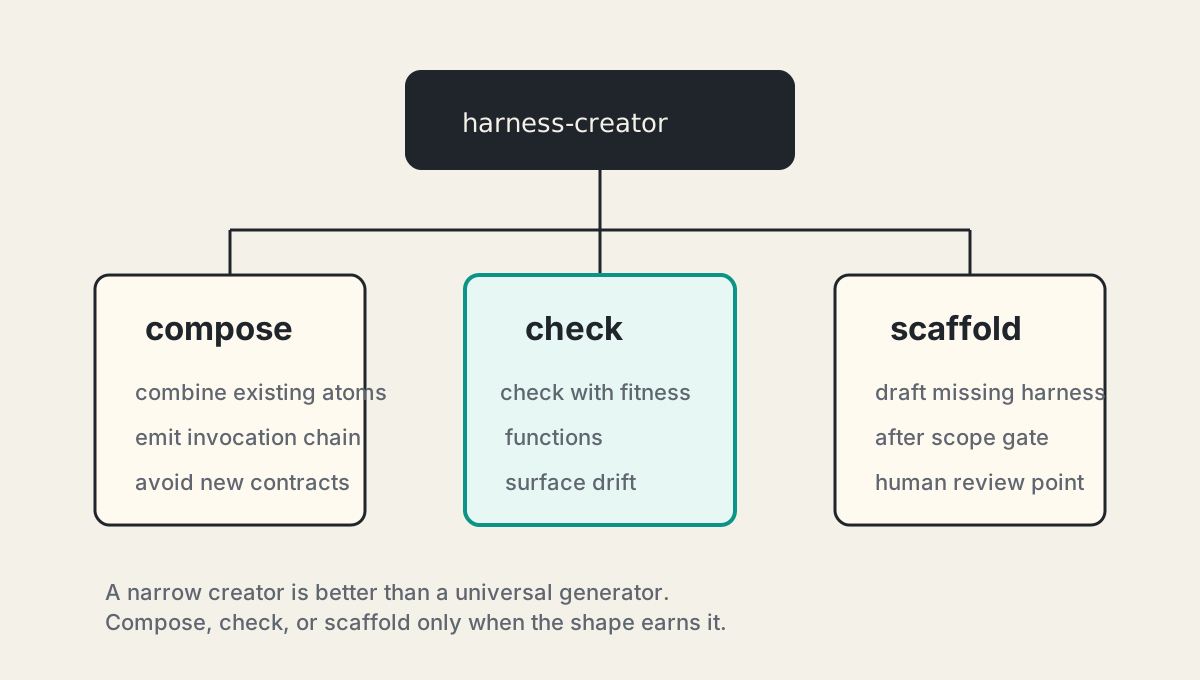
The important part is refusal.
A useful creator tool does not generate structure for everything. It checks whether the requested output is workflow-shaped. If it is not, the system should continue with conventional means.
That refusal is part of the product.
What Stays Out
This post is intentionally narrow.
There are other PAI layers and later fork additions: task ledgers, public canon extraction, expanded tool libraries, dashboard surfaces. They matter. They are not this post.
The reason is the same reason Post 1 stayed clean. If everything appears in one article, none of the boundaries stay legible.
Harness engineering deserves its own treatment because it answers one precise question: how do repeated workflows become reliable system parts?
Everything else can wait until it has an equally clean reason to be explained.
Baseline for Future Extensions
The useful fork addition is not maximal automation.
It is knowing when structure earns its cost, then making that structure repeatable.
PAI gives the assistant a chassis. Harness engineering gives repeated work a rail. The assistant can still improvise where the work is new. But when the path is known, the system should stop pretending every run is the first run.
That is the first fork layer.